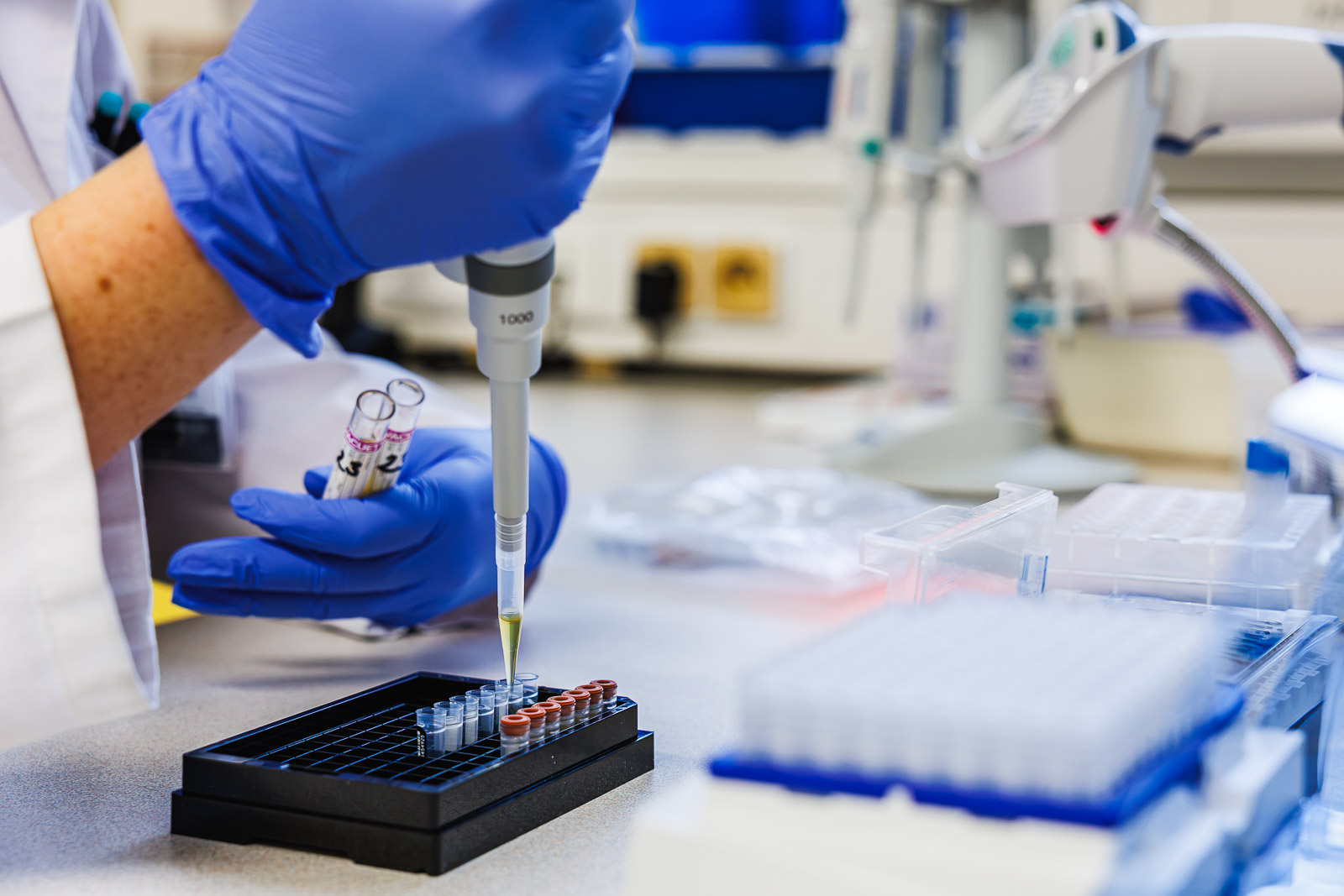
Thirteen researchers from the CarDia project are included in this year’s update to the database of the world’s most-cited scientists, published on October 7, 2026, by John P. A. Ioannidis of Stanford University and Elsevier. Of the 59 researchers involved in the project, more than one-fifth made it onto the list, known as the top 2% of most-cited scientists.
Cardiovascular research is the most heavily represented field. In this subfield, where the database lists nearly 250,000 authors, the names include Petr Widimský, Josef Kautzner, Aleš Linhart, Vojtěch Melenovský, David Sedmera, and Michal Pravenec. In the 2025 ranking, Aleš Linhart ranks among the top 0.31% in his field, Vojtěch Melenovský among the top 0.41%, and Josef Kautzner among the top 0.52%.
Tomáš Čajka holds the highest ranking in his field for 2025, placing 189th (0.14%) among 137,000 authors in analytical chemistry. In the lifetime rankings, epidemiologist Martin Bobák leads, ranking 205th out of more than 82,000 authors in the field of public health (0.25%). Also featured in the rankings are Petr Ježek and Ondřej Kuda in biochemistry and molecular biology, Lucie Bačáková in biomedical engineering, Martin Haluzík in endocrinology and metabolism, and Tomáš Zima in urology and nephrology.
Five of them work at the Institute of Physiology of the Czech Academy of Sciences, three at IKEM, three at the First Faculty of Medicine, Charles University, Petr Widimský at the Third Faculty of Medicine, Charles University, and Martin Bobák at the RECETOX Center at Masaryk University. The ranking thus features representatives from four of the project’s five partner institutions, spanning fields from basic research to clinical cardiology and diabetology. We congratulate all thirteen colleagues.
The database is compiled annually by John P. A. Ioannidis and Jeroen Baas using Scopus data. This year’s edition is based on data as of August 1, 2026, and evaluates lifetime citation impact through the end of 2025 as well as citations for the year 2025 alone. The ranking is determined by a composite indicator called the c-score, which also takes into account co-authorship and the author’s position within the research team.
Anyone who ranks among the top 2% in their field is included in the database. The authors note that the indicator measures citation impact and that absence from the list does not imply anything about the quality of scientific work.
Source: Ioannidis JPA. August 2026 data-update for “Updated science-wide author databases of standardized citation indicators”. Elsevier Data Repository, version 9, 2026. DOI: 10.17632/btchxktzyw.9
Nov 2, 2026 · @Michal Dubský





dana.hruskova@ikem.cz



dana.hruskova@ikem.cz
