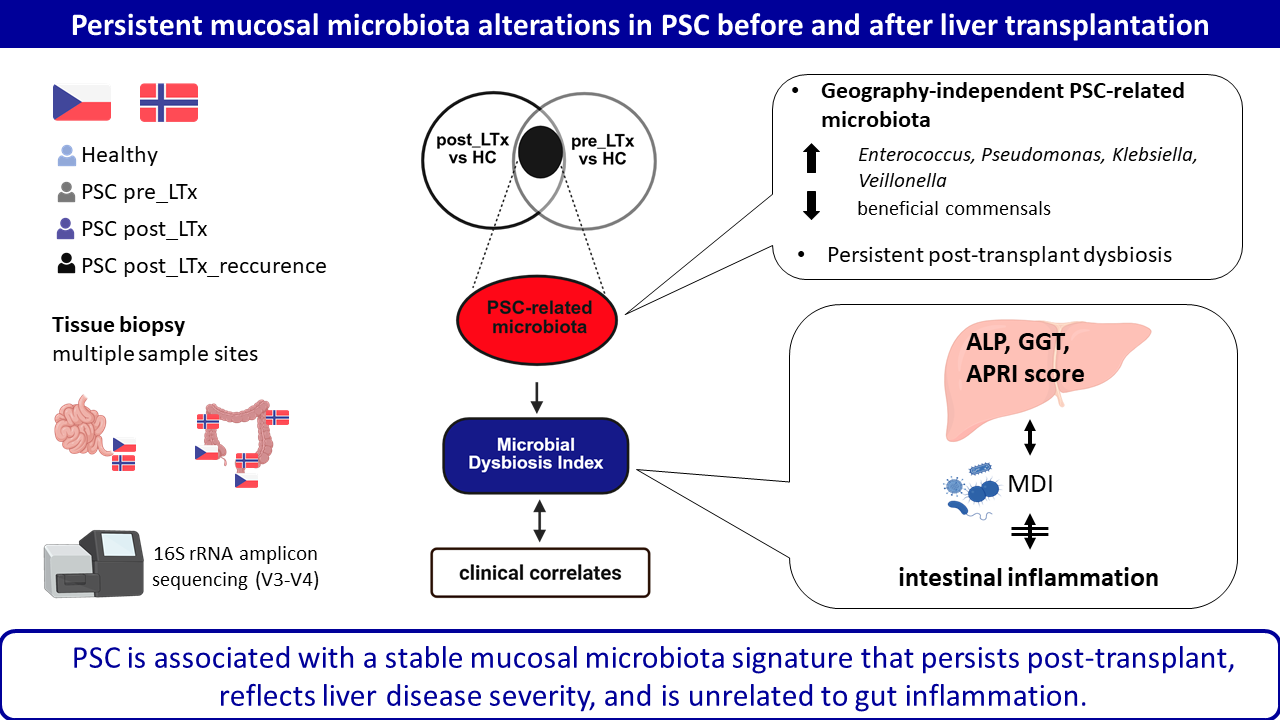
A study published in JHEP Reports, conducted by Prof. Cahová’s team at IKEM in collaboration with Norwegian colleagues from Oslo, examined the composition of the gut microbiome in patients with primary sclerosing cholangitis (PSC) before and after liver transplantation.
PSC is a serious chronic disease of the bile ducts for which there is currently no effective drug treatment. By analyzing the gut mucosal microbiome in more than 350 participants from the Czech Republic and Norway, the authors demonstrated that PSC is associated with a characteristic and geographically independent microbiota composition, dominated by an increase in potentially pathogenic genera (Enterococcus, Klebsiella, Veillonella) and a decline in beneficial commensal bacteria. Furthermore, the degree of dysbiosis correlates with the severity of cholestasis and liver fibrosis, but not with the presence of intestinal inflammation.
A key finding is that these changes persist even after successful liver transplantation, which contrasts with other liver diseases where transplantation normalizes the microbiome. This finding suggests that the gut microbiome likely plays an active role in the pathogenesis of the disease.
🔗 The full article is available here: https://www.sciencedirect.com/science/article/pii/S2589555925003994





dana.hruskova@ikem.cz



dana.hruskova@ikem.cz
